4 October 2026
4 Application Queue Service Options Compared for Reliable Background Work

TL;DR
An application queue service stores work until a consumer can process it, but a managed queue does not necessarily manage your worker code. I would shortlist Amazon SQS for AWS-native message buffering, Azure Service Bus for broker features, Cloudflare Queues for autoscaling Worker consumers, and db3.ai Queue for jobs integrated into a TypeScript application you operate. Compare the failure path, complete execution cost, and who actually runs workers before choosing.
When a request starts an import, an AI generation, or a report, returning quickly is only the first requirement. The work also needs a durable identity, a processing path, bounded retries, and an outcome someone can inspect. An application queue service usually handles the handoff between producer and consumer; it may or may not host the consumer. Confusing those responsibilities makes a product look more hands-off than it is.
This comparison is for product engineers selecting infrastructure for background tasks, application events, and scheduled workflows. I have included three managed cloud queues and one framework-integrated alternative because these are distinct decisions a TypeScript team might actually face. This is a supporting evaluation guide, not a claim that db3.ai sells a hosted replacement for a cloud queue. Microsoft's queue-service tutorial illustrates why the word queue needs qualification: its example uses an in-process bounded channel, not independently durable managed messaging.
Table of contents
- How I selected and compared the options
- 1. Amazon Simple Queue Service (Amazon SQS): AWS-native message buffering
- 2. Azure Service Bus: managed queues with broker features
- 3. Cloudflare Queues: managed messages with autoscaling Worker consumers
- 4. db3.ai Queue: application-integrated jobs with self-operated workers
- Which option should you test first?
- Run the same recovery drill on each finalist
- Frequently asked questions
- Sources
- Recommended Reads
How I selected and compared the options
Each option has a public product or documentation page and a concrete route for handing work to a consumer. I assessed the same questions wherever documentation supports an answer: who stores work; who deploys and scales consumers; how failed attempts and terminal work are handled; what operators can see; how delayed or recurring work is triggered; and what is billed or operated. These are different from ranking by throughput, which depends on workload and configuration. The screenshots below show the actual official product or documentation pages, not interchangeable diagrams.
A queue is not a complete workflow engine. A broker can also offer topics for fan-out, while a scheduler establishes when work is due; a job queue library or integrated framework supplies application-level job definitions around a storage backend. Azure Service Bus, for example, documents queues for competing consumers and topics for multiple subscriptions. Microsoft's Service Bus overview explains that distinction. For each option, I would also ask whether enqueueing is atomic with a related business write. A durable message does not close a separate write-to-enqueue gap automatically.
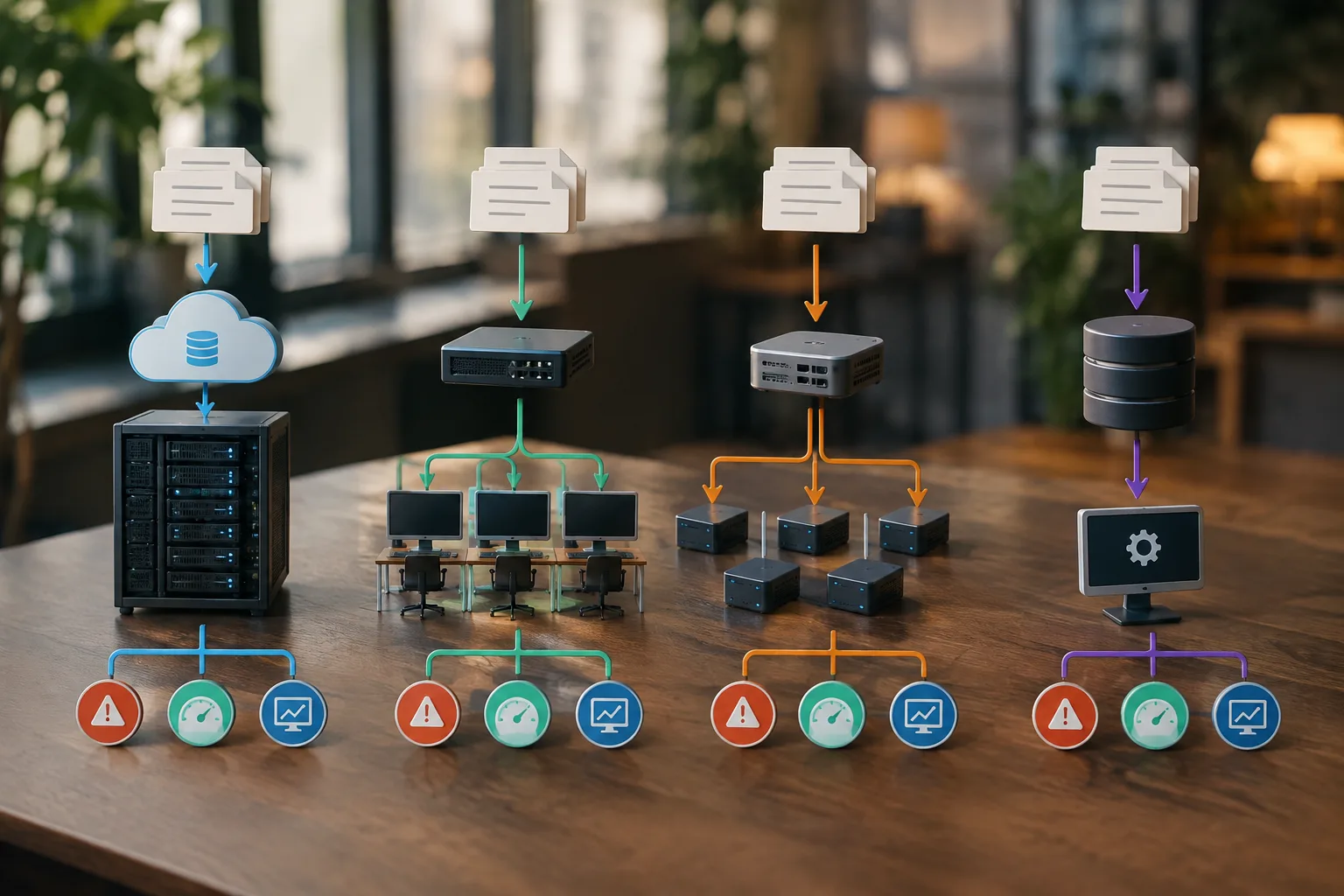
Four execution paths matter here: a managed message buffer with your own consumers, a feature-rich managed broker, a queue connected to autoscaling platform consumers, and a queue embedded in an application runtime whose workers you supervise. The visual is a decision aid, not a claim that their delivery or scaling guarantees are identical.
1. Amazon Simple Queue Service (Amazon SQS): AWS-native message buffering
Best fit: An AWS application that needs a managed message store and is willing to design its own processing layer.
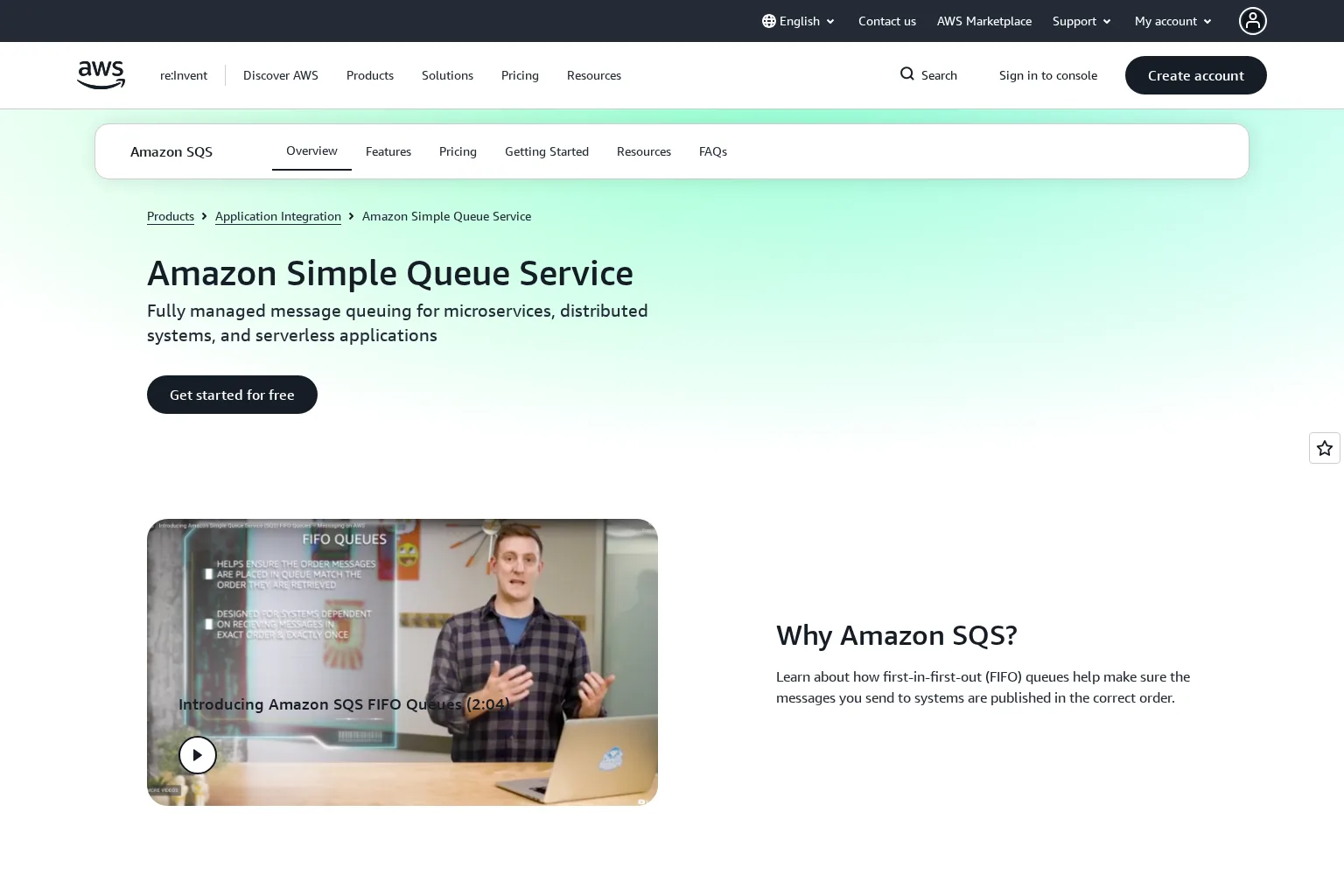
Amazon SQS manages the queue infrastructure, not arbitrary application handlers. Producers send messages; consumers receive, process, and delete them. Standard queues provide at-least-once delivery and may deliver out of order. A visibility timeout temporarily hides a received message, but a failed or slow consumer may lead to redelivery; use a stable application key to prevent duplicate business effects. Choose a FIFO queue when its ordering and deduplication model matches the workload, and still validate downstream side effects separately. AWS's standard-queue documentation describes its delivery behavior.
For recovery, configure a dead-letter queue and a redrive policy rather than expecting a poison message to resolve itself. Test whether the visibility timeout covers long-running AI tasks, and how consumers extend or relinquish ownership. SQS publishes queue metrics through CloudWatch, including approximate backlog and message age, but application-level completion and a safe replay operation remain your design. AWS's monitoring guidance describes the queue-side metrics.
Scaling and cost: SQS scales the message service; you still choose and operate consumers, or separately configure a compute integration and its scaling rules. AWS prices SQS by requests and queue type; include consumer compute, monitoring, and related services in the estimate. Choose it when AWS integration and control over worker deployment matter more than an all-in-one job UI. For recurring work, evaluate a separate scheduling trigger rather than equating SQS message delay with a calendar scheduler.
2. Azure Service Bus: managed queues with broker features
Best fit: A team moving business messages across services that needs a managed broker, queue consumers, and potentially topic-based fan-out.
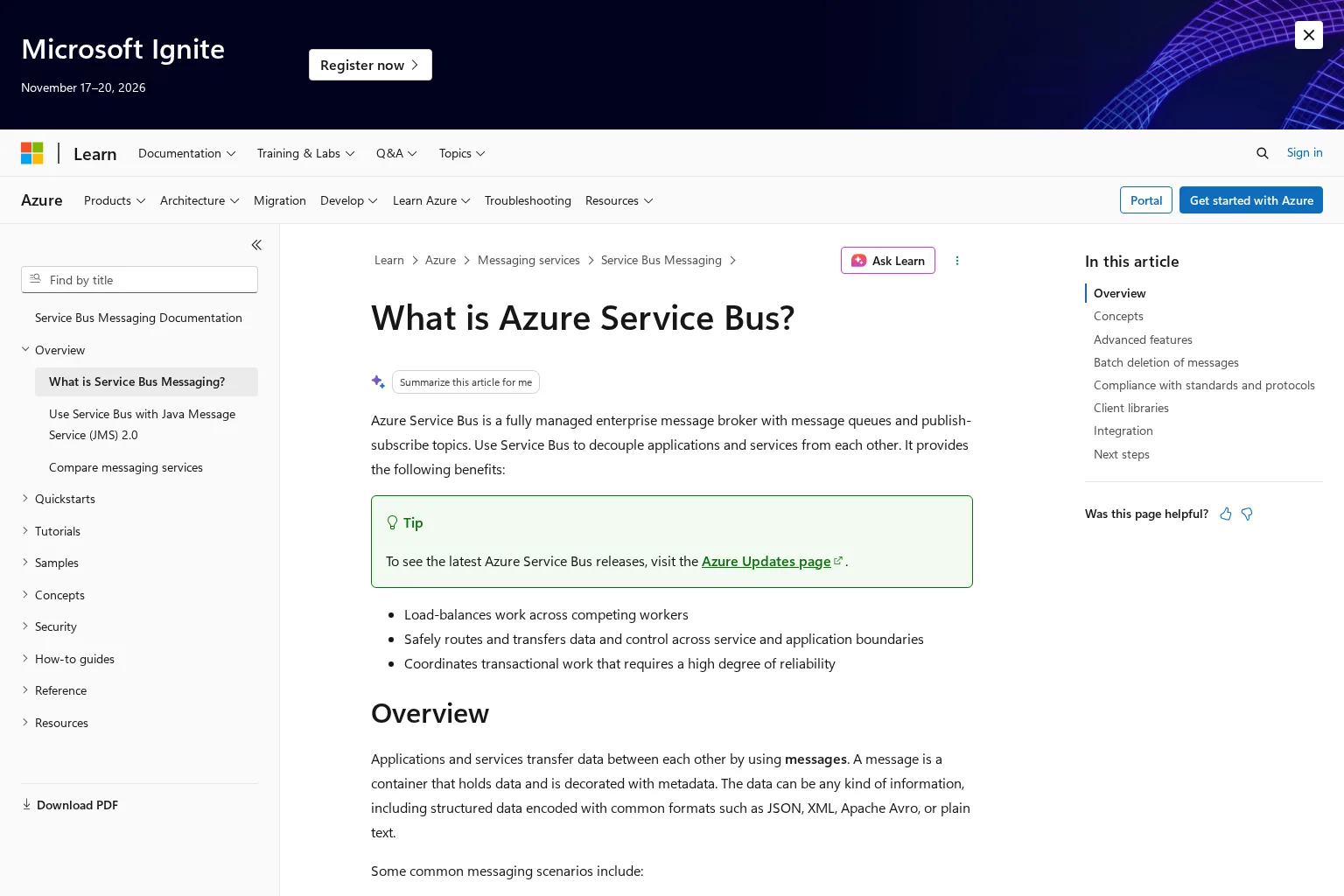
Service Bus stores messages in queues until receiving applications request them; topics deliver copies to subscriptions when several recipients need an event. Scheduled delivery, sessions, and message deferral are documented features, but availability depends on the chosen tier and configuration. Sessions are relevant when ordering within a related stream matters. A scheduled message delays one delivery; generating recurring business occurrences still requires a schedule owner. Microsoft's Service Bus overview describes the model and features.
Consumers can use peek-lock settlement, so work becomes available again if a lock expires before completion. Service Bus maintains dead-letter subqueues for messages that cannot be processed, including those exceeding the delivery limit. An operator can inspect and resubmit failed messages, but your application must distinguish a correct replay from an accidental repeat of a completed payment or notification. Microsoft's dead-letter guidance explains the recovery path. Azure Monitor reports active and dead-letter message metrics; correlate those with your own business outcomes rather than mistaking broker acceptance for completion. The monitoring reference lists available metrics.
Scaling and cost: Azure runs the broker; your receivers and their capacity remain yours to arrange, whether they run in a service or through an additional compute integration. Microsoft's pricing page distinguishes Basic, Standard, and Premium tiers, with different feature availability and charging models. Check the tier before depending on sessions or transactions. Choose it when messaging topology and broker controls justify that configuration work, not merely because a managed broker sounds like managed job execution.
3. Cloudflare Queues: managed messages with autoscaling Worker consumers
Best fit: Teams comfortable running task handlers as Cloudflare Workers and looking to reduce separate consumer-fleet management.
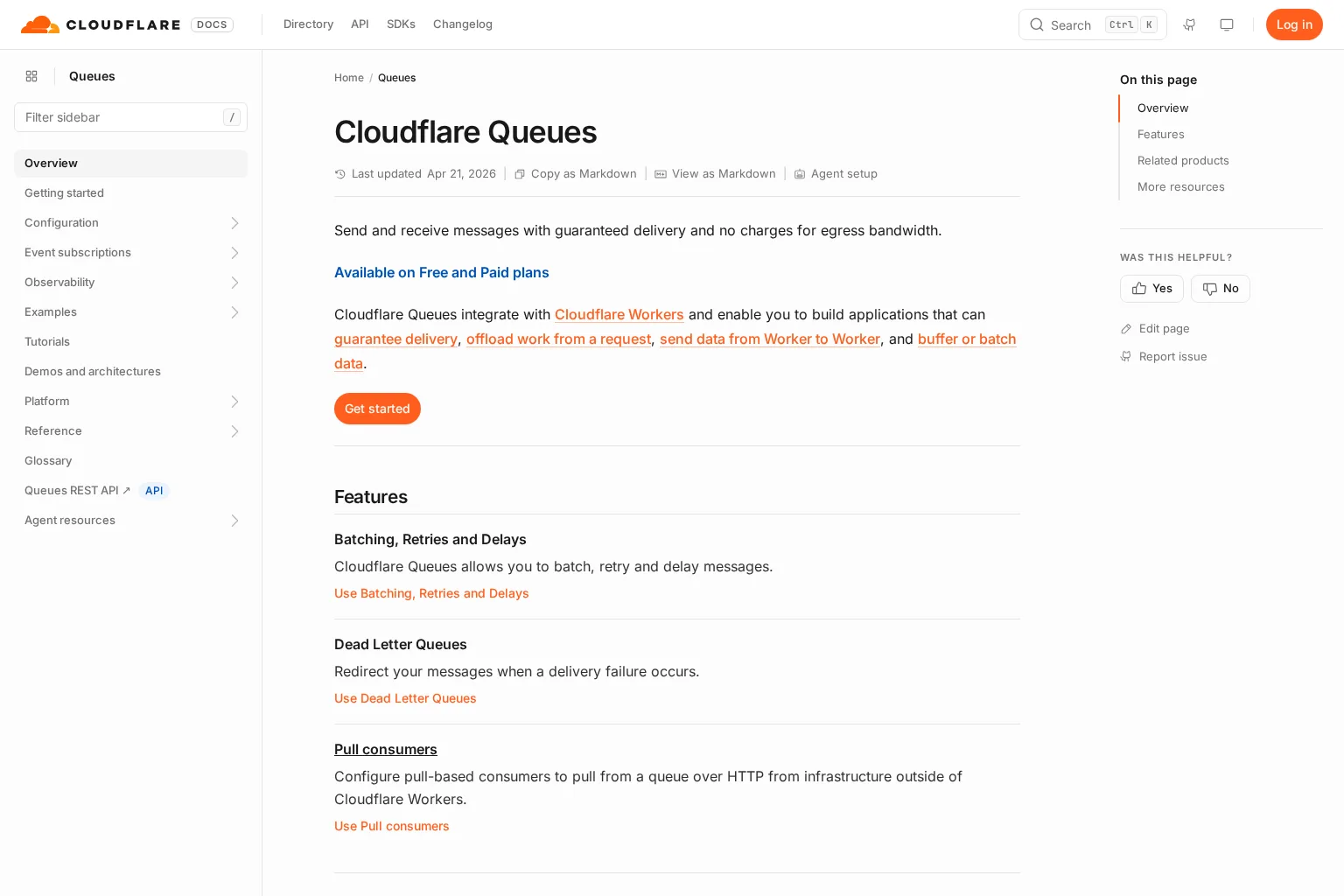
Cloudflare Queues connects producers to consumer Workers, and its documentation also supports pull consumers running outside Workers. Consumer Workers can autoscale in response to backlog and failures, subject to configured and platform limits. That is a more integrated scaling path than operating a dedicated polling fleet, but it does not scale a third-party API's quota or a customer's database. Set a consumer concurrency ceiling when downstream systems need protection, then watch whether backlog grows beyond useful retention. Cloudflare's Queues overview and consumer-concurrency documentation document these boundaries.
Batching can reduce invocations, but a failed batch may cause already processed messages to be delivered again unless you acknowledge individual successes. Configure maximum retries and a dead-letter queue deliberately: Cloudflare documents that messages exhausting retries are otherwise deleted from the original queue. Its per-message delay is useful for brief deferral, not an unlimited scheduling system. Cloudflare's retry and batching guide details those behaviors. Track queue backlog and consumer results alongside your own task-status records; queue metrics alone do not tell a user whether an AI artifact is ready.
Scaling and cost: Queue charges are operation-based, while Worker invocations and CPU time follow the relevant Workers billing model; retries can add reads. Check payload size, retention, and both products' limits when estimating a long-running or high-volume workload. Choose it when Workers are an acceptable execution environment and automatic consumer concurrency removes meaningful work for your team. If execution must remain in your own infrastructure, evaluate the documented pull-consumer route and count its worker operations separately.
4. db3.ai Queue: application-integrated jobs with self-operated workers
Best fit: A TypeScript application already using @db3.ai/app that wants queue jobs defined and dispatched alongside application services, while retaining responsibility for the runtime.
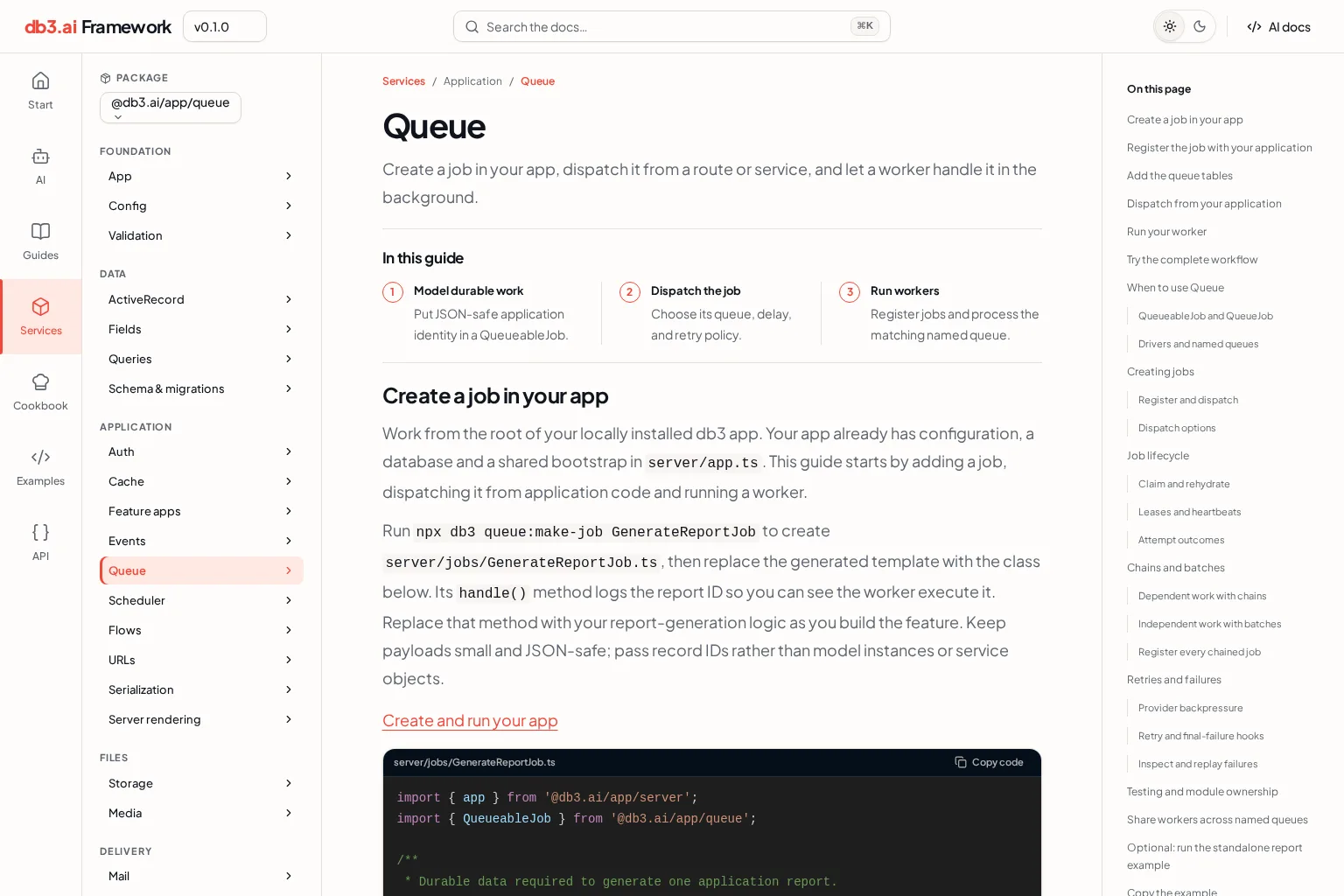
The db3.ai Queue guide documents a default application-database driver and a Redis driver, JSON-safe job data, named queues, separately started workers, delayed dispatch, and retry policies. Named queues let you assign different worker capacity to reports and notifications. Register job classes in the shared bootstrap used by producers and workers: dispatching in one process does not register a class in a separate worker. Neither a database driver nor a matching named queue automatically starts or scales that worker.
The public Queue API exposes failed-job inspection, linked replay, attempt outcomes, and configurable backoff. An intentional QueueRetryLaterError can defer provider backpressure without consuming an ordinary attempt, so an application-owned deadline must stop indefinite waiting. The backpressure example makes that boundary explicit. These are application queue capabilities, not a claim of a fully managed external queue service, exactly-once side effects, or a hosted worker fleet. Supply infrastructure health checks, worker supervision, queue telemetry, and a user-facing result model yourself.
To test the fit, follow the documented setup: install a matching @db3.ai/app package, configure its database or Redis driver, migrate QueuedJob and FailedJob for the database driver, create and register GenerateReportJob in the shared app bootstrap, and start a worker listening on reports. Inside a booted route or application service, the documented job can be dispatched with an explicit retry budget:
import { app } from '@db3.ai/app/server';
import { GenerateReportJob } from './jobs/GenerateReportJob';

const jobId = await app().queue.dispatch(
  new GenerateReportJob({ reportId: 'weekly' }),
  {
    queue: 'reports',
    maxTries: 5,
    backoff: {
      strategy: 'exponential',
      initialSeconds: 15,
      maxSeconds: 900,
      jitter: true,
    },
    retryUntilSeconds: 3_600,
  },
);
jobId proves enqueueing, not report completion. The guide's starter handler logs a report ID; you must replace it with your application-specific, repeatable report generation and track its result. This snippet does not implement an atomic business-write-to-enqueue transaction or a fleet-wide provider rate limit, and I have not executed it in your deployment. The complete queue walkthrough and queued-work example cover worker setup and recovery paths.
Scaling and cost: You size and operate the database or Redis and the worker processes. No verified @db3.ai/app package price is available to quote here; obtain the applicable distribution and hosting terms for your deployment. Choose it when application-level job modeling and a shared TypeScript runtime are more valuable than outsourcing worker operations.
Which option should you test first?
| Priority | Start with | What you still own |
|---|---|---|
| AWS-native, high-volume message handoff | Amazon SQS | Consumer deployment, side-effect deduplication, and result visibility. |
| Broker routing and multiple subscribing services | Azure Service Bus | Receiver capacity, tier selection, and application-level outcome tracking. |
| Lower effort scaling Workers-based handlers | Cloudflare Queues | Handler behavior, downstream limits, retention choices, and business state. |
| Jobs integrated with one TypeScript application | db3.ai Queue | Storage, supervised workers, deployment, and operational monitoring. |
This is a starting shortlist, not a claim that one option has higher reliability for every workload. If portability is the first constraint, define a small application-owned job payload and handler contract before adopting any vendor-specific message shape. If minimizing operations is the first constraint, trial the whole execution path, not just the managed queue: a service that stores messages but leaves workers to you is not the same as a managed task executor. The official SQS, Service Bus, Cloudflare Queues, and db3.ai Queue pages make their respective boundaries clear.
Run the same recovery drill on each finalist
Use one harmless report or AI indexing task. Persist a stable business key, enqueue it, stop the consumer after a simulated external write but before it records success, and restart processing. Can you identify the result without producing a duplicate artifact? Then cause a transient provider error, a permanently invalid payload, and a worker outage. Record the wait time, number of attempts, next retry time, terminal-failure location, and steps required for a safe replay. Standard SQS may redeliver, Service Bus locks may expire, Cloudflare may retry a failed batch, and db3.ai may report a lost lease; these are distinct mechanisms with the same business-level question. See AWS's delivery semantics, Service Bus dead-letter behavior, Cloudflare's retry guide, and db3.ai's queue lifecycle.
Test scheduled work separately: identify the due occurrence, the enqueue, and the completed business effect. A queue delay controls initial availability, not necessarily recurring calendar ownership. Log a correlation key across those transitions and alert on work that never becomes due, stays unclaimed, exhausts retries, or finishes without a persisted result. For AI jobs, include the cost and safety of repeating a provider call after a timeout. The winning option is the one your team can explain and recover under those conditions, not the one with the shortest enqueue snippet.
Frequently asked questions
Does a managed application queue service also manage my workers?
Not always. Amazon SQS and Azure Service Bus manage the message infrastructure while your consumer deployment needs its own plan. Cloudflare can invoke and autoscale consumer Workers, while its pull consumers can run elsewhere. db3.ai Queue is a framework capability whose worker processes you run. Compare the complete producer-to-result path. AWS, Microsoft, Cloudflare, and db3.ai document the respective models.
Can I assume exactly-once processing if the queue supports retries or deduplication?
No. Deduplicating a send or limiting simultaneous claims does not make an external email, charge, or AI request atomic with recording queue success. Use a stable business identifier, an idempotent downstream operation when supported, and reconciliation before replaying ambiguous effects. The SQS standard-queue guide explicitly documents potential duplicate deliveries, while db3.ai's lease discussion calls out an uncertain outcome after ownership loss.
Next step: Pick a representative job and run the recovery drill against two shortlisted approaches. If your team already uses db3.ai, start with the Queue guide's producer-and-worker example, then test a named worker, a deliberate retry, and a failed-job replay before treating enqueueing as a shipped feature.
Sources
- AWS: Amazon SQS overview
- AWS: SQS standard-queue delivery behavior
- AWS: Monitoring SQS with CloudWatch
- AWS: Amazon SQS pricing
- Microsoft Learn: Azure Service Bus overview
- Microsoft Learn: Service Bus dead-letter queues
- Microsoft Learn: Service Bus monitoring reference
- Microsoft Azure: Service Bus pricing
- Cloudflare: Queues overview
- Cloudflare: Consumer concurrency
- Cloudflare: Batching, retries, and delays
- Cloudflare: Queues pricing
- db3.ai: Queue guide
- db3.ai: Queue API reference
- db3.ai: Backpressure and deferral example
- db3.ai: Queued-work examples
- Microsoft Learn: Create a queue service
Recommended Reads
- TypeScript Job Queue: How to Choose for Retries, Concurrency, and Recovery for a deeper TypeScript implementation comparison.
- Background Task Scheduling: A Reliability Guide for Backend Jobs for recurring-work and missed-run design.